How Air Freight Works: From Booking Request to Final Delivery
Air freight moves cargo through a coordinated chain of booking, collection, export handling, security screening, airline acceptance, flight operations, import clearance and final delivery. The aircraft journey is only one part. Reliable execution depends on accurate shipment data, suitable packaging, compliant documents, confirmed capacity and controlled handovers before and after the flight.
What happens during an air freight shipment?
A typical international air freight shipment passes through these stages:
- Shipment information and booking request
- Route and service selection
- Rate and capacity confirmation
- Cargo preparation and documentation
- Collection or delivery to the export facility
- Export handling and security screening
- Airline acceptance
- Build-up and aircraft loading
- Flight and possible transfer
- Arrival and import handling
- Customs clearance and cargo release
- Final delivery and proof of delivery
The exact process varies by country, airline, airport, commodity and service level. Dangerous goods, pharmaceuticals, perishables, live animals, valuable cargo and oversized freight require additional controls.
1. The booking request establishes what must be moved
An air freight booking starts with a clear description of the shipment and the result the customer needs.
A useful booking request normally includes:
- Origin and destination
- Requested pickup date
- Required delivery date
- Number and type of packages
- Dimensions of each package
- Gross weight
- Commodity description
- Declared value, when required
- Stackability
- Temperature or handling requirements
- Dangerous-goods status
- Shipper and consignee details
- Customs information
- Availability date and location
- Delivery address and facility requirements
Incomplete information makes routing and pricing unreliable.
For example, a total weight without package dimensions isn’t enough to determine chargeable weight or confirm whether the freight will fit the intended aircraft. A general description such as “machine parts” may not reveal batteries, liquids, magnets, pressurized components or other regulated contents.
The requested delivery date also needs context. The forwarder must know whether it is a preferred target or a fixed operational deadline. A shipment needed for a production restart requires a different planning approach from replenishment stock with several acceptable arrival dates.
2. The shipment is checked before a route is proposed
The forwarder reviews the request to determine whether the freight is suitable for air transport and what constraints may affect it.
The review may cover:
- Package dimensions and aircraft limitations
- Actual and chargeable weight
- Commodity restrictions
- Dangerous-goods classification
- Export and import requirements
- Security-screening feasibility
- Temperature-control needs
- Airline acceptance rules
- Airport operating hours
- Ground-handling cut-offs
- Customs readiness
- Pickup and final-delivery access
- Weekend and holiday restrictions
This step prevents a common mistake: treating a flight schedule as a complete transport plan.
A flight may appear suitable online but still be unusable because the cargo is too large for the aircraft, the airline doesn’t accept the commodity, the export facility closes before tender, or the destination cannot clear the shipment on arrival.
3. Route and service selection balance time, control and cost
Air freight isn’t a single service.
A shipment may move on:
- A direct passenger flight
- A direct freighter service
- A connecting service through one or more hubs
- A deferred or consolidated air service
- A next-flight-out service
- An aircraft charter
- A combined road-and-air routing
- An onboard courier or hand-carry service, when legally and operationally appropriate
The fastest scheduled flight isn’t always the most reliable choice.
A direct service reduces the number of handovers, but it may operate less frequently. A connecting route may offer an earlier departure while introducing transfer risk. A freighter can accept cargo that doesn’t fit through a passenger-aircraft door, but its schedule may be more limited.
Route selection should consider:
- Required delivery time
- Flight frequency
- Number of connections
- Aircraft type
- Cargo dimensions
- Handling requirements
- Transfer time
- Recovery alternatives
- Customs capability at destination
- Total door-to-door plan
The objective is not simply to book the earliest flight. It is to choose a route that can accept the cargo and still support the required delivery outcome.
4. The quotation depends on weight, volume and service requirements
Air freight charges commonly depend on chargeable weight.
Chargeable weight is generally the higher of:
- Actual gross weight
- Volumetric weight
Volumetric weight represents the space occupied by the shipment. A large, lightweight package may consume more aircraft capacity than its physical weight suggests.
A commonly used metric calculation is:
Volumetric weight in kilograms = length × width × height in centimetres ÷ 6,000
The applicable factor can vary by carrier, service and contract, so it should be confirmed for the shipment.
A complete quotation may include more than the airline freight charge. Depending on the scope, it can also include:
- Pickup
- Export handling
- Security screening
- Documentation
- Customs brokerage
- Airline or terminal charges
- Fuel or security surcharges
- Special handling
- Transfer handling
- Import terminal charges
- Storage
- Duties and taxes
- Final delivery
- Waiting time or special equipment
The quotation should clearly state what is included, excluded and based on assumptions.
5. Capacity must be confirmed
A rate isn’t the same as a confirmed booking.
Airline capacity can change because of passenger baggage, aircraft substitution, operational disruption, seasonal demand or restrictions on particular cargo. Large or unusually shaped pieces may require additional approval even when their total weight is modest.
The booking confirmation should identify:
- Planned airline and routing
- Flight or service details, when confirmed
- Cargo cut-off
- Booking reference
- Accepted piece count
- Confirmed weight and dimensions
- Special handling codes
- Documentation requirements
- Conditions or outstanding approvals
Until capacity and acceptance conditions are confirmed, the routing remains a proposal rather than a secure movement plan.
Even a confirmed booking is subject to operational execution. Air cargo can be offloaded, delayed or rerouted. Critical shipments therefore need monitoring and a recovery plan, not only a reservation.
6. Packaging must survive the complete transport chain
Air cargo passes through warehouses, vehicles, handling systems, screening equipment, terminals and aircraft loading operations.
Packaging must protect the goods during:
- Collection
- Warehouse handling
- Security screening
- Pallet or container build-up
- Aircraft loading
- Vibration and movement
- Transfers between flights
- Breakdown at destination
- Final delivery
The package should match the cargo’s weight, dimensions, fragility and handling requirements. Pallets, crates and cartons must be strong enough for the planned movement.
Labels and markings should remain visible and secure. Old or conflicting labels should be removed where appropriate.
Any instruction such as “Do Not Stack,” “Keep Upright” or “Protect from Freezing” must be communicated during booking. A label alone doesn’t guarantee that a handling requirement has been accepted or can be maintained throughout the route.
Dangerous goods require specific classification, packaging, marking, labeling and documentation. The shipper is responsible for correct classification. Undeclared or incorrectly prepared dangerous goods can be rejected and may create serious safety and regulatory consequences.
7. Documents and shipment data must agree
Air freight involves commercial, transport, customs and sometimes regulatory documentation.
Common documents include:
- Commercial invoice
- Packing list
- Air waybill
- Export declaration, when required
- Import permits or licenses
- Certificate of origin, when applicable
- Dangerous Goods Declaration, when required
- Product certificates
- Security documentation
- Transit documents
- Power of attorney or brokerage authorization
The required documents depend on the countries, commodity, transaction and customs procedure.
The air waybill is a key transport document and forms the contract of carriage between the shipper and the airline. Electronic air waybills can replace the paper air waybill on enabled routes and under the applicable arrangements.
Information should remain consistent across the booking, invoice, packing list, air waybill and customs submission.
Differences in piece count, weight, commodity description, shipper details or consignee information can interrupt acceptance or clearance. These problems are often discovered at the worst possible time: after the cargo reaches the airport and the flight cut-off is approaching.
8. Collection connects the shipper to the export operation
Once the freight is ready, it is collected or delivered to the forwarder or export-handling facility.
Before collection, the parties should confirm:
- Cargo-ready time
- Exact collection address
- Contact person
- Facility operating hours
- Loading equipment
- Vehicle requirements
- Package count
- Final weight and dimensions
- Document availability
- Special handling instructions
The collection plan must work backward from the airline’s cargo cut-off.
A shipment cannot arrive at the terminal at the same time the aircraft is scheduled to depart. It needs time for receiving, document checks, security controls, acceptance, build-up and movement to the aircraft.
This is why air freight cut-off times can be many hours before departure.
9. Export handling prepares the freight for airline acceptance
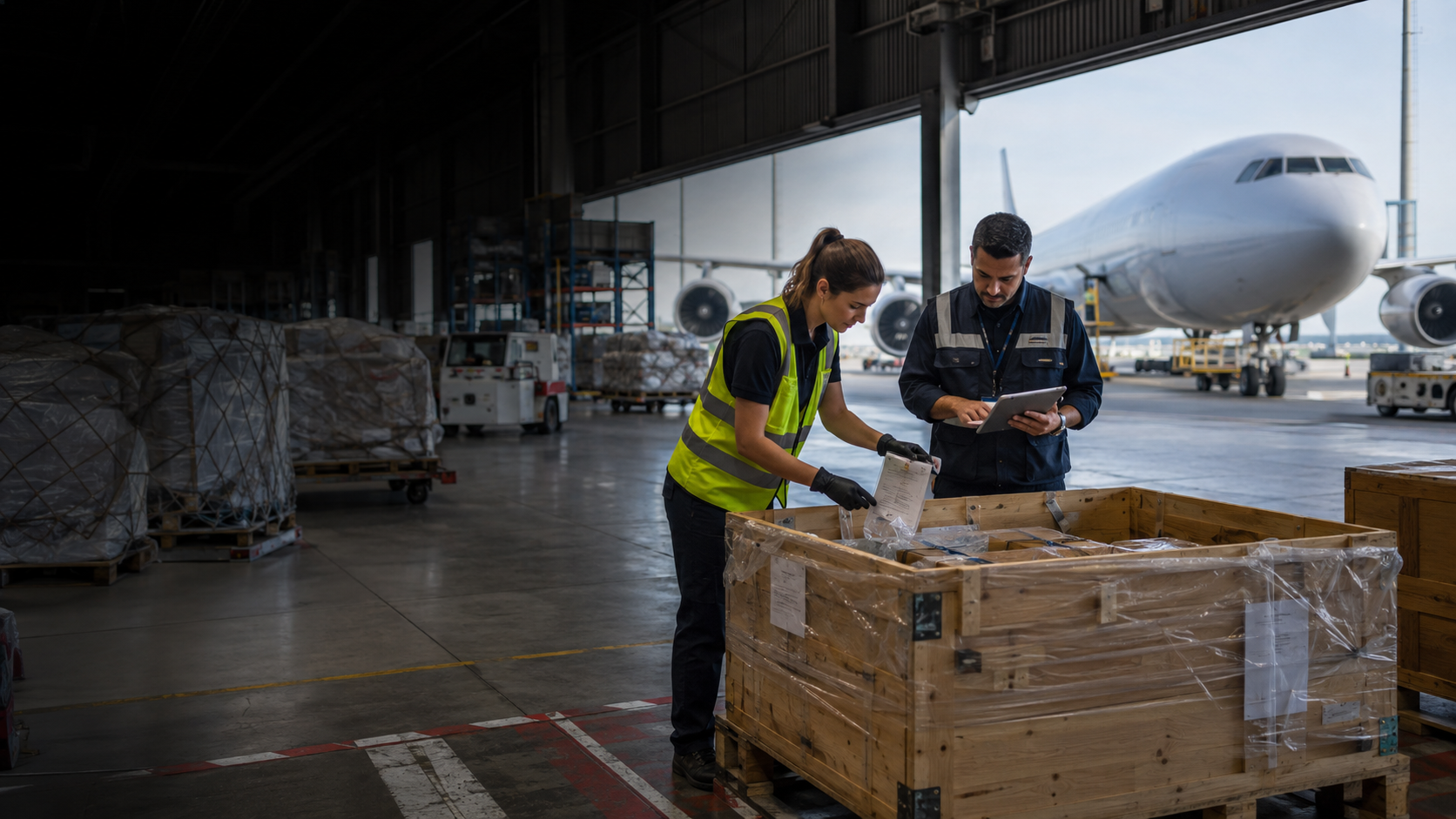
At the export facility, the freight and documents are checked against the booking.
The handling process may include:
- Receiving the cargo
- Confirming piece count
- Checking weight and dimensions
- Inspecting visible packaging condition
- Verifying labels and markings
- Reviewing documentation
- Completing security procedures
- Preparing export records
- Transferring the shipment to the airline or ground handler
If the physical cargo doesn’t match the booking data, the shipment may need to be corrected, rebooked or repriced.
A difference in dimensions can affect aircraft compatibility. A difference in weight can change the chargeable weight. Missing labels or documents can prevent acceptance.
Time lost at this stage can cause the shipment to miss its planned flight.
10. Security screening is part of the cargo journey
Air cargo must enter the aviation security system before loading.
The exact process depends on the origin country, security status, supply-chain participants, cargo type and applicable regulations. Screening methods may include physical inspection, X-ray or other approved procedures.
Some freight is more difficult to screen because of its size, density, construction or contents. That should be identified during planning, not after arrival at the terminal.
If standard screening cannot be completed, the shipment may require another approved method, different preparation or additional time.
Security status must also remain protected through controlled handling and transport. A secure shipment can lose its status if the chain of custody is broken under the applicable program.
11. Airline acceptance decides whether the cargo is ready for carriage
Airline acceptance is more than handing freight to a terminal.
The airline or ground handler checks whether the cargo meets the conditions for transport. According to IATA guidance, commercial air cargo generally passes through an acceptance process designed to confirm readiness for carriage and compliance with carrier, export, import and handling requirements.
Acceptance may verify:
- Booking details
- Number of pieces
- Weight and dimensions
- Packaging condition
- Labels and markings
- Documentation
- Security status
- Dangerous-goods compliance
- Special handling requirements
- Route restrictions
If these checks are completed successfully, the shipment can be treated as ready for carriage.
Acceptance can fail when:
- The freight differs from the booking
- Packaging is inadequate
- Documentation is incomplete
- Security requirements haven’t been met
- Dangerous goods are undeclared or incorrectly prepared
- The cargo exceeds aircraft or handling limits
- Required approvals are missing
- The shipment arrives after cut-off
The earlier these risks are identified, the more recovery options remain available.
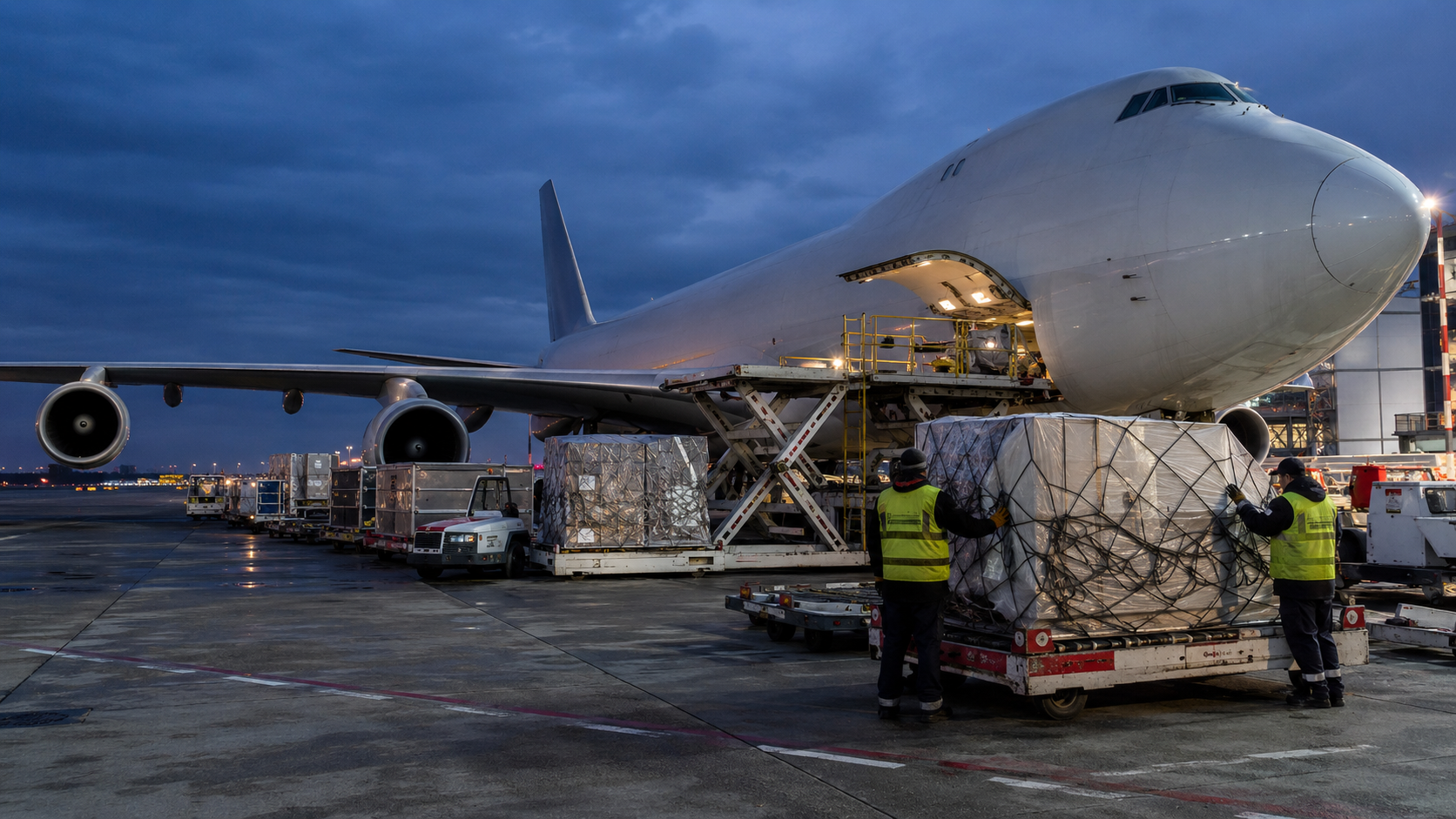
12. Build-up prepares cargo for the aircraft
Accepted cargo is organized for loading.
Depending on the aircraft and route, it may be:
- Loaded as loose cargo
- Secured to an aircraft pallet
- Placed inside a unit load device
- Combined with other compatible shipments
- Prepared under special temperature or security controls
During build-up, weight distribution, compatibility, restraint and aircraft limitations matter.
Cargo isn’t loaded simply in the order it reaches the terminal. The airline must consider the aircraft plan, available positions, connecting priorities, dangerous-goods segregation and operational requirements.
A shipment accepted by the airline can still be offloaded because of capacity, aircraft changes, weight restrictions or operational priorities.
13. The flight may include road movement and transfers
The airport-to-airport journey may contain more than one flight. It can also include scheduled road feeder services between airports.
A connecting shipment is unloaded at the transfer hub, moved through the cargo terminal and prepared for the next departure.
Each transfer introduces another operational dependency:
- Arrival performance of the first flight
- Minimum connection time
- Terminal congestion
- Documentation and data transfer
- Security status
- Cargo compatibility
- Availability on the onward flight
Tracking should distinguish between planned events and confirmed physical events. “Booked” doesn’t mean loaded. “Departed” should refer to the actual flight movement, not only the original schedule.
For urgent cargo, monitoring should focus on the milestones that could change the delivery outcome.
14. Arrival begins the import process
At destination, the cargo is unloaded and transferred to the airline or ground-handling facility.
The import process can include:
- Flight-arrival confirmation
- Aircraft unloading
- Transfer to the cargo terminal
- Unit-load-device breakdown
- Shipment identification
- Arrival-status updates
- Document availability
- Customs presentation
- Terminal release
Cargo may not become available immediately after the aircraft lands.
The handler needs time to unload, process and locate the shipment. Large consolidations must be broken down before individual shipments can be released. Local terminal procedures and operating hours also affect availability.
Flight arrival and cargo availability are different milestones.
15. Customs clearance determines whether the shipment can be released
Customs clearance can begin before arrival when the necessary data and documents are available and local procedures allow advance processing.
The broker or responsible party may need:
- Commercial invoice
- Packing list
- Air waybill details
- Importer information
- Product classification
- Customs value
- Country of origin
- Licenses or permits
- Supporting certificates
- Duty and tax instructions
Customs may release the shipment, request additional information, inspect the goods or refer the entry to another authority.
Delays frequently result from:
- Incomplete product descriptions
- Incorrect tariff classification
- Missing importer registration
- Valuation questions
- Missing licenses
- Differences between documents
- Unpaid duties or taxes
- Regulatory inspection
Fast air transport cannot compensate for customs information that wasn’t prepared.
The best way to protect the arrival plan is to begin document review before departure rather than waiting for the cargo to land.
16. Terminal release and recovery must be coordinated
Customs release doesn’t automatically mean that the freight is ready to leave the terminal.
The airline or handler may also require:
- Arrival documentation
- Payment of terminal charges
- Release authorization
- Original or electronic delivery instructions
- Identification of the collecting party
- Vehicle or appointment information
Storage charges may begin after the applicable free period. The consignee, broker, forwarder and delivery provider should therefore coordinate release rather than treating their tasks as separate steps.
For special cargo, the collection vehicle may need temperature control, security arrangements, a tail lift, loading equipment or other capabilities.
17. Final delivery completes the shipment
The final delivery plan should confirm:
- Delivery address
- Receiving contact
- Facility hours
- Appointment requirements
- Vehicle access
- Unloading equipment
- Package count
- Handling instructions
- Documentation requirements
- Proof-of-delivery standard
A shipment can cross several countries successfully and still fail at the last mile because the receiving facility is closed, the contact is unavailable or the vehicle cannot access the site.
For urgent shipments, delivery confirmation should capture more than a driver status. Useful proof may include:
- Recipient name
- Signature
- Delivery date and time
- Package count
- Condition or exception notes
- Photographs, when appropriate and permitted
- Refusal or shortage details
The shipment is operationally complete when delivery is confirmed and any remaining exceptions are documented.
Who is responsible at each stage?
Air freight involves several parties.
The shipper
The shipper prepares the goods and provides accurate information. This includes suitable packaging, correct commodity details and disclosure of dangerous goods.
The freight forwarder
The forwarder plans the route, requests capacity, coordinates collection, prepares transport data, manages handovers and monitors the movement according to the agreed scope.
The airline
The airline accepts eligible cargo under its conditions of carriage and transports it between the agreed airports.
Ground handlers
Ground handlers receive, process, store, build up, break down and release cargo on behalf of airlines or other parties.
Customs broker
The broker prepares or submits customs entries under the applicable authorization and supports responses to customs questions.
Importer and consignee
The importer provides the information and authority needed for clearance. The consignee prepares to receive the shipment and report delivery exceptions.
The exact contractual responsibility depends on the agreement, Incoterms rule, customs arrangement and purchased service.
Where do air freight shipments commonly fail?
Many failures begin before the cargo reaches the airport.
Common causes include:
- Incomplete booking information
- Incorrect dimensions or weight
- Unclear delivery deadline
- Unconfirmed capacity
- Inadequate packaging
- Undeclared dangerous goods
- Missing export or import documents
- Late cargo readiness
- Missed terminal cut-off
- Failed security screening
- Aircraft substitution
- Offload or missed connection
- Customs-data errors
- Unpaid destination charges
- Poor final-delivery information
The strongest air freight plan identifies these risks while alternatives are still available.
What should shippers confirm before booking?
Before approving an air freight shipment, confirm:
- The real cargo-ready time
- The required delivery time
- Complete package dimensions
- Gross weight
- Accurate commodity description
- Dangerous-goods status
- Packaging suitability
- Export-document readiness
- Importer and customs readiness
- Planned route and connections
- Confirmed capacity
- Cargo cut-off
- Included and excluded charges
- Tracking and escalation process
- Recovery options
- Final-delivery requirements
For critical freight, also establish who can make decisions outside normal working hours.
Frequently asked questions
How long does international air freight take?
There is no universal transit time. The result depends on cargo readiness, collection, flight availability, connections, screening, export procedures, customs clearance, terminal release and final delivery. Airport-to-airport flight time represents only one part of the journey.
Is air freight always sent on a cargo aircraft?
No. Air cargo can move in the lower deck of passenger aircraft or on dedicated freighters. The choice depends on the route, capacity, dimensions, weight, commodity and handling requirements.
What is an air waybill?
An air waybill is a transport document that forms the contract of carriage between the shipper and the airline. It contains shipment, routing and handling information. On enabled routes, an electronic air waybill may replace the paper document.
What is chargeable weight?
Chargeable weight is the weight used to calculate the air freight charge. It is generally the higher of the shipment’s actual gross weight and its calculated volumetric weight.
Why is the cargo cut-off earlier than the flight departure?
Cargo needs time for receiving, document review, security controls, airline acceptance, build-up and movement to the aircraft. Arriving before departure isn’t sufficient.
Can air freight be guaranteed?
Air freight can be planned and monitored against a required deadline, but scheduled services remain exposed to capacity, weather, aircraft, handling, customs and other operational risks. Any guarantee must be based on the specific service’s written terms.
Can dangerous goods move by air?
Many dangerous goods can move by air when correctly classified, packaged, marked, labeled, documented and accepted under the applicable regulations. Some items are restricted or forbidden. The shipment must be reviewed before booking.
Does flight arrival mean the cargo is ready for collection?
No. The cargo must be unloaded, processed, identified and made available by the destination handler. Customs and terminal-release requirements must also be completed.
Air freight is a chain, not a flight
The aircraft provides speed between airports. The full service depends on every stage around it.
Accurate information supports the booking. Suitable packaging protects the cargo. Documentation supports acceptance and customs clearance. Security controls make the shipment eligible for loading. Monitoring protects connections, while coordinated import handling turns arrival into final delivery.
A reliable air freight plan works backward from the required delivery result and gives every handover an owner, deadline and recovery path.
Planning an air freight shipment? Send Top Gun Cargo the origin, destination, cargo-ready date, required delivery date, commodity, package count, dimensions, weight and handling requirements. The team can assess the route, capacity and controls required for the movement.
Sources
- IATA: What to Know About Air Cargo Handling (external)
- IATA: Tips for Preparing Cargo for Air Transport (external)
- IATA: Electronic Air Waybill (external)
- IATA: Dangerous Goods Regulations (external)
- IATA: Dangerous Goods Shipper’s Declaration (external)
- IATA: Dangerous Goods Frequently Asked Questions (external)
- ICAO: Air Cargo Security and Screening (external)