What Is Drayage? A Shipper’s Guide to Port and Intermodal Drayage
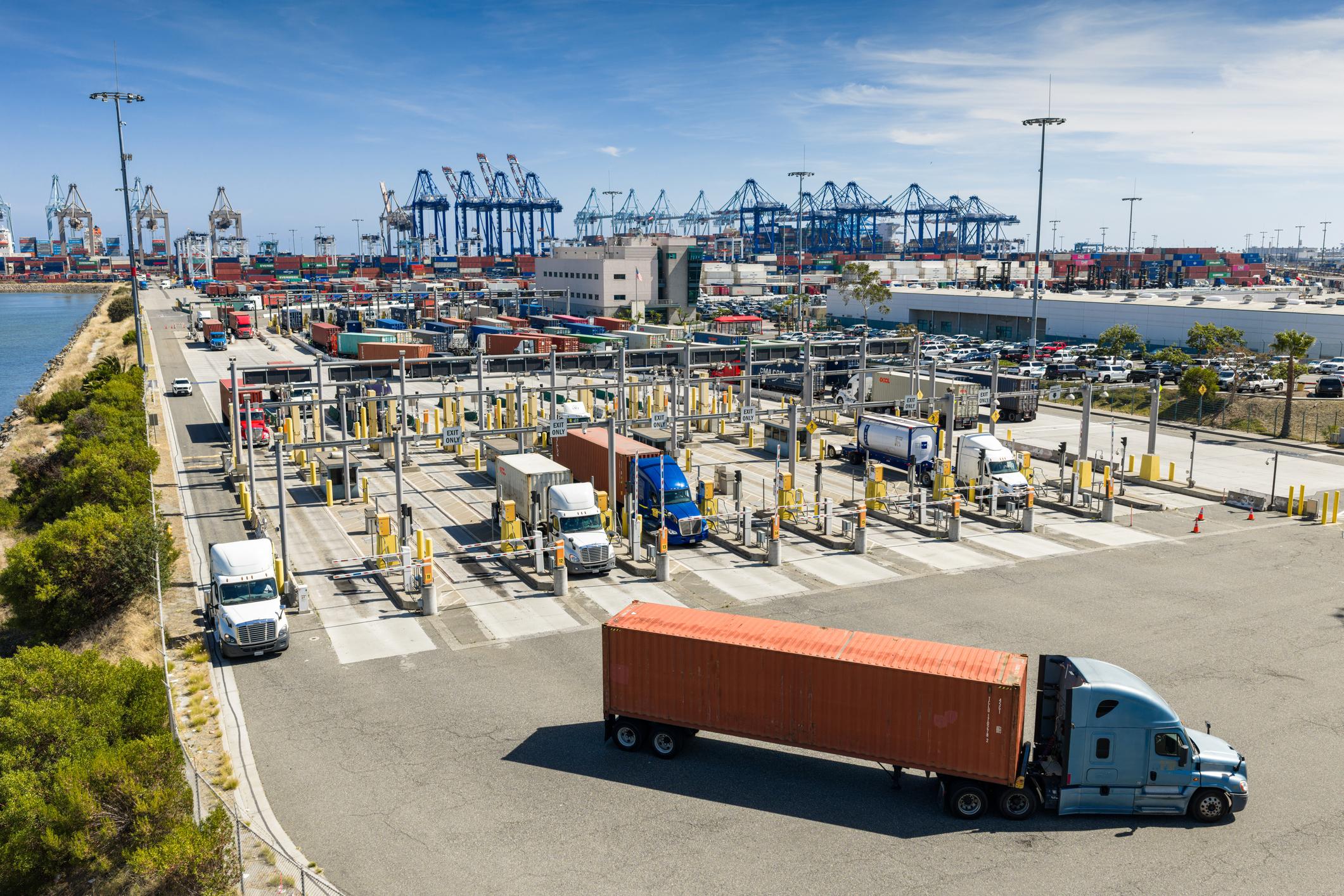
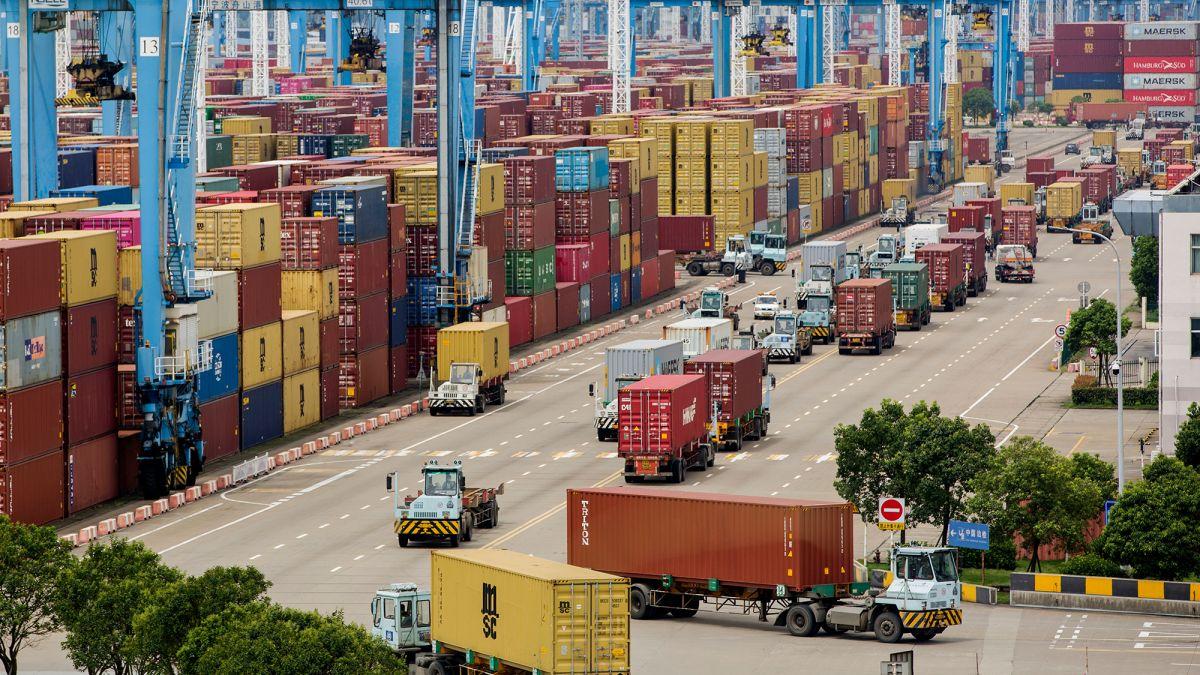
Drayage is the short-distance movement of freight, usually a shipping container, between a port, rail terminal, warehouse, distribution center, or another transportation facility. Although the distance may be relatively short, drayage is a critical handoff in international and intermodal freight because terminal availability, appointments, chassis, customs status, free time, and delivery requirements all have to align.
For shippers, drayage is less about mileage than coordination. A container might travel thousands of miles by ocean or rail, then encounter its most time-sensitive operational constraints during the final 20 or 50 miles.
This guide explains how port and intermodal drayage work, what information matters, where costs and delays arise, and what shippers should control before a container becomes available.
What Does Drayage Mean in Freight?
Drayage connects the long-haul portion of a shipment with the next point in the supply chain.
A typical international container movement might look like this:
Origin → Ocean vessel → Port terminal → Drayage → Warehouse → Empty container return
An intermodal rail shipment could instead follow:
Origin → Rail terminal → Train → Destination rail ramp → Drayage → Distribution center
The drayage carrier handles one of the shorter physical movements in either chain, but that movement often sits between operations controlled by different parties.
The driver may need to coordinate with:
- a marine terminal or rail ramp;
- the ocean or rail carrier;
- a chassis provider;
- the customs broker;
- the freight forwarder or 3PL;
- the consignee or warehouse;
- appointment systems; and
- the empty-container return location.
That is why a simple description such as “move the container from the port to our warehouse” can hide significant operational complexity.
How Does Port Drayage Work?
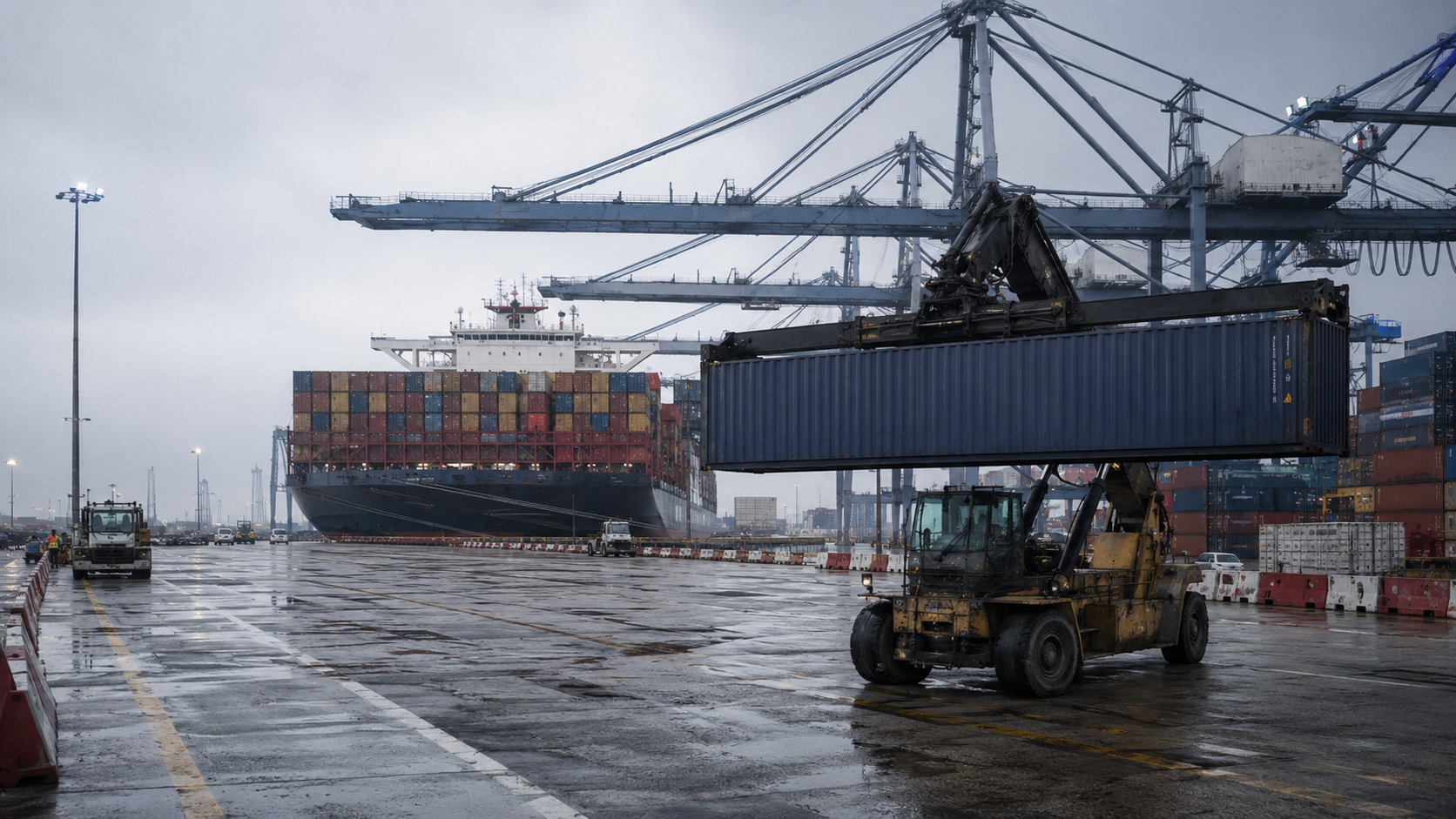
Port drayage begins when an import container is discharged from a vessel and eventually becomes eligible for pickup.
Physical availability alone does not necessarily mean the container can leave the terminal. Customs, carrier, terminal, documentation, payment, appointment, or equipment requirements may still prevent release.
A typical import drayage process follows these stages.
1. The container arrives at the port
The vessel reaches the destination port and the container is discharged into the marine terminal.
The shipment then moves into the terminal's import process.
2. The container becomes available
The drayage provider monitors the container and determines when it can actually be retrieved.
Several conditions may need to be satisfied, including:
- container discharge;
- customs release;
- carrier release;
- terminal availability;
- payment of applicable charges;
- appointment availability; and
- any documentation required for pickup.
A useful distinction is:
Arrived does not necessarily mean available, and available does not necessarily mean ready for immediate pickup.
That distinction matters when planning delivery dates.
3. A terminal appointment may be secured
Some terminals use appointment systems for container pickup.
Appointment availability can become an operational constraint, particularly during congestion or periods of high import volume.
A shipment can therefore be technically available while the practical pickup window remains limited.
4. Equipment is confirmed
The driver needs the correct tractor and chassis arrangement to move the container.
Depending on the terminal, carrier, equipment pool, and operating model, chassis availability or positioning may need separate coordination.
Special containers can introduce additional requirements. Refrigerated, overweight, hazardous, or out-of-gauge cargo should be identified before dispatch rather than discovered at the terminal.
5. The driver retrieves the container
Once the necessary releases, appointment, and equipment are in place, the driver enters the terminal and retrieves the loaded container.
Terminal congestion, queues, equipment issues, or other operating conditions can affect how long this takes.
6. The container moves to the delivery location
The driver transports the container to the consignee, warehouse, distribution center, transload facility, or another designated location.
The delivery facility may have its own requirements, such as:
- delivery appointments;
- receiving hours;
- security procedures;
- driver check-in instructions;
- unloading restrictions; or
- special equipment requirements.
7. The container is unloaded
What happens next depends on the delivery arrangement.
The driver may wait while the container is unloaded. Alternatively, the container may be dropped for unloading and collected later.
This distinction affects equipment utilization, scheduling, and potentially cost.
8. The empty container is returned
Drayage does not necessarily end when the cargo reaches the consignee.
For many import moves, the empty container must still be returned to an authorized location within the applicable equipment free-time conditions.
The required return location can also change, so return instructions need to be verified rather than assumed.
What Is Intermodal Drayage?
Intermodal drayage performs a similar function around rail terminals rather than marine ports.
For example, an international container may arrive at a U.S. port, move inland by rail, and then require a truck for the final movement from the rail ramp to the consignee.
A simplified chain could be:
Port → Rail → Inland rail ramp → Drayage → Distribution center
The drayage provider coordinates pickup from the rail facility, local transportation, delivery, and any required equipment return.
The operational principles remain similar to port drayage: availability, releases, appointments, equipment, facility requirements, and free-time exposure must be controlled.
Why Is Drayage So Important?
The mileage can make drayage look like a minor part of an international shipment. Operationally, it can be one of the most consequential.
Consider a container that has already crossed an ocean.
If nobody is monitoring its availability, customs status, free time, terminal appointment, chassis requirements, warehouse receiving window, and empty return, the container can begin accumulating avoidable cost while sitting only a few miles from its destination.
Drayage is therefore a handoff-management problem as much as a trucking problem.
A strong drayage plan connects:
availability → release → appointment → equipment → pickup → delivery → unloading → empty return
A weakness at one stage can affect everything that follows.
What Information Is Needed to Plan a Drayage Move?
The carrier or logistics provider needs more than a pickup and delivery address.
For an import container, a practical shipment file should usually include the following information.
Information
Why it matters
Port or rail terminal
Identifies the pickup facility
Container number
Allows the shipment to be monitored and identified
Container size/type
Determines equipment requirements
Steamship line or rail carrier
Helps determine release and return requirements
Vessel/voyage or rail information
Supports arrival planning
Estimated arrival
Establishes the planning window
Availability status
Indicates when pickup can actually begin
Customs/release status
Determines whether the container can leave
Last free day, when known
Helps prioritize pickup and control charge exposure
Delivery address
Determines routing
Delivery appointment
Establishes the receiving window
Facility hours
Prevents failed or mistimed delivery
Cargo weight
Affects legal and equipment planning
Commodity
Helps identify special handling requirements
Hazardous status
May change carrier, documentation, or equipment requirements
Live unload or drop
Changes driver and chassis planning
Empty return requirements
Determines the final equipment movement
For quotation purposes, provide these details as early as possible. Missing information can turn an apparently simple rate into an incomplete estimate.
See What Information Is Needed to Quote a Drayage Shipment? for the detailed quote-input checklist.
What Is a Last Free Day?
A last free day (LFD) is the final day available under the applicable free-time arrangement before certain terminal-related charges may begin.
It is an important operational deadline, but it should not be treated as a universal fixed rule.
Free-time calculations and charge structures can vary by terminal, carrier, equipment arrangement, location, and contract.
The practical lesson is simpler:
Do not wait until the last free day to start planning the pickup.
The shipment should ideally be monitored before availability so that releases, appointments, equipment, and delivery arrangements can be aligned early.
Demurrage, Detention and Storage: What Is the Difference?
These terms are frequently mixed together, and exact terminology can vary by provider or location.
At a practical level:
Charge
Generally relates to
Demurrage
Container remaining at a terminal beyond applicable free time
Detention
Carrier equipment remaining outside the terminal beyond allowed free time
Storage
Cargo or equipment occupying space at a facility beyond the applicable allowance
The important operational question isn't merely what a charge is called. It is:
What deadline applies, what event starts the clock, who controls the next action, and what must happen to stop additional exposure?
Those questions should be established before a container approaches its free-time limits.
What Is a Pre-Pull?
A pre-pull occurs when a container is retrieved from the terminal before its final delivery and temporarily staged at another location.
Suppose a container's last free day is Tuesday, but the consignee cannot receive it until Wednesday.
Waiting until Wednesday could create terminal-related cost exposure or pickup risk. A drayage provider may instead retrieve the container Tuesday and stage it overnight before delivering Wednesday.
A pre-pull can be useful when:
- the terminal deadline comes before the delivery appointment;
- terminal appointments are limited;
- congestion creates pickup uncertainty;
- the consignee cannot receive the container immediately; or
- operational risk justifies getting the container out of the terminal earlier.
A pre-pull isn't automatically the cheapest option because additional moves, storage, chassis use, or other charges may apply. The relevant comparison is the total expected cost and operational risk, not one accessorial in isolation.
What Is a Chassis Split?
A chassis split occurs when the chassis and container need to be obtained or positioned at different locations, requiring an additional equipment movement.
Instead of a straightforward:
tractor → terminal → container → consignee
the operation may require additional chassis positioning before the container can be moved.
That extra movement can affect both timing and price.
This is one reason accurate terminal, carrier, equipment, and container information matters when requesting a drayage quote.
What Is a Live Unload?
With a live unload, the driver remains with the container while the consignee unloads it.
Once unloading is complete, the driver can take the empty container toward its required return location.
This works well when the receiving facility can unload within a predictable window.
Long unloading times, however, can create driver waiting time and interfere with subsequent appointments.
A drop arrangement is different. The loaded container is left at the facility and collected later after unloading.
Neither model is automatically better. The right choice depends on unloading time, facility space, chassis availability, equipment rules, scheduling, and cost.
Where Do Drayage Delays Usually Begin?
Many drayage problems originate before the truck reaches the gate.
Customs or carrier holds
A driver cannot solve an unresolved release simply by arriving at the terminal.
Dispatching before release can waste an appointment and create unnecessary truck time.
Missing or incorrect shipment information
An incorrect container number, terminal, weight, delivery address, or appointment instruction can interrupt the move.
Good master data is operational infrastructure.
Terminal appointment constraints
Container availability and appointment availability are separate issues.
A pickup plan should account for both.
Chassis or equipment problems
Equipment availability can become a constraint depending on the terminal, location, carrier arrangement, and container type.
Delivery appointment conflicts
The port may release a container before the warehouse can receive it.
That mismatch may require staging, a pre-pull, or another operating plan.
Slow unloading
A live unload scheduled for a short receiving window can become expensive if the facility takes substantially longer than expected.
Empty-return complications
The shipment isn't operationally finished simply because the consignee has the cargo.
The empty still has to reach an acceptable return location under the applicable equipment conditions.
TGC Drayage Control Framework
Rather than treating drayage as one truck movement, shippers can manage it through five control points.
1. RELEASE — Can the container actually move?
Confirm:
- terminal availability;
- customs status;
- carrier release;
- relevant documentation; and
- unresolved holds.
2. CLOCK — What deadlines are running?
Identify:
- applicable free time;
- last free day when available;
- delivery appointment;
- facility receiving hours; and
- equipment-return timing.
3. EQUIPMENT — What is physically required?
Confirm:
- container type and size;
- cargo weight;
- chassis requirements;
- special equipment;
- overweight considerations; and
- hazardous or refrigerated requirements where applicable.
4. HANDOFF — Can the receiver accept the freight?
Verify:
- correct delivery address;
- appointment number or reference;
- receiving contact;
- unloading method;
- facility restrictions; and
- realistic unloading time.
5. RETURN — How does the equipment cycle close?
Before treating the move as complete, verify:
- empty status;
- authorized return location;
- return appointment if required;
- return acceptance; and
- completion evidence.
This framework turns drayage from a single pickup instruction into a controlled sequence of operational decisions.
Example: Planning an Import Container
Consider a 40-foot container arriving at a marine terminal.
The consignee wants delivery Thursday morning.
A weak plan might be:
Vessel arrives Monday. Book a truck for Thursday.
A stronger plan starts with dependencies rather than the requested delivery date.
Before arrival: confirm container details, delivery location, receiving hours, cargo weight, unloading method, contacts, and shipment references.
After discharge: monitor availability and release status.
Before pickup: verify the applicable free-time deadline, terminal appointment, equipment requirements, and Thursday receiving appointment.
During delivery: monitor gate-out, transit, arrival, and unloading.
After unloading: confirm where and when the empty container can be returned and record completion.
The truck mileage may be identical under both plans.
The operational risk is not.
How Can Shippers Reduce Drayage Costs?
The cheapest quoted linehaul rate does not necessarily produce the lowest final drayage cost.
A low base rate can quickly lose its advantage if the move generates:
- waiting time;
- storage;
- extra chassis movements;
- pre-pulls;
- redelivery;
- additional terminal visits;
- missed appointments; or
- free-time-related charges.
The better approach is to reduce preventable exceptions.
Provide complete information before dispatch. Monitor releases and availability. Coordinate the terminal and receiver instead of treating them as separate operations. Identify free-time deadlines early. Confirm the empty-return plan.
Most importantly, evaluate the whole container move, not only the truck rate.
When Should Drayage Be Arranged?
Drayage should generally be planned before the container becomes available, not after.
That doesn't mean a truck should be dispatched before the shipment is released.
It means the operational groundwork should already be in place:
terminal identified → shipment monitored → delivery requirements confirmed → equipment planned → release checked → appointment secured → pickup executed
Waiting until the container is already available compresses the planning window and can increase exposure when appointments or equipment are limited.
Port Drayage vs. Intermodal Drayage
The two operations share the same fundamental purpose but interact with different facilities.
Port drayage
Intermodal drayage
Connects marine terminals with inland facilities
Connects rail ramps with inland facilities
Interfaces with ocean carriers and port terminals
Interfaces with rail carriers and intermodal terminals
Vessel discharge influences availability
Train arrival and grounding influence availability
Port appointments may affect pickup
Rail-ramp procedures may affect pickup
Empty return requirements are critical
Equipment-return requirements remain important
For the shipper, the management principle remains consistent: know when the freight is actionable, what deadline applies, what equipment is required, and what the receiving facility can actually accommodate.
Frequently Asked Questions
How far is a drayage shipment?
There is no single mileage threshold that defines every drayage move. Drayage generally describes a relatively short truck movement connecting ports, rail terminals, warehouses, and other nodes within a broader freight journey.
Is drayage the same as trucking?
Drayage is a type of trucking, but the term usually refers specifically to short-distance movements associated with ports, rail terminals, containers, and intermodal transportation.
Who arranges drayage?
Depending on the shipment and commercial arrangement, drayage may be coordinated by the importer, exporter, freight forwarder, 3PL, ocean carrier, customs-connected logistics provider, or another party responsible for inland transportation.
Can a container be picked up as soon as the vessel arrives?
Not necessarily. The container normally needs to be discharged and available, and applicable customs, carrier, terminal, documentation, appointment, and payment requirements must be satisfied.
What is the biggest drayage risk for shippers?
There is no universal single risk. A common pattern is poor coordination between release status, free-time deadlines, terminal capacity, equipment availability, and the consignee's receiving window. When those elements aren't managed together, a short container move can generate delays and additional charges.
What information should I send for a drayage quote?
At minimum, provide the pickup terminal, delivery location, container size and type, cargo weight, carrier, shipment or container reference, timing, unloading requirements, and any special cargo conditions. For import moves, availability, free-time, release, and empty-return information should also be provided when known.
The Practical Takeaway
Drayage may cover the shortest distance in an international container journey, but it shouldn't be treated as an afterthought.
The truck movement depends on a chain of events: the container must become available, releases must clear, appointments and equipment must align, the receiving facility must be ready, and the empty equipment must ultimately be returned correctly.
For shippers, effective drayage management comes down to controlling those dependencies before they become exceptions.
Planning a port or intermodal container move? Have the terminal, container type, cargo weight, delivery location, timing, unloading requirements, and available release information ready before requesting a quote. Complete shipment data gives the operations team a much better basis for planning the move and identifying potential accessorial exposure early.
Suggested Internal Links
- What Information Is Needed to Quote a Drayage Shipment?
- How to Reduce Detention and Demurrage Risk in Drayage (when published)
- What Is a Chassis Split, Pre-Pull or Drop-and-Hook? (when published)
- How Ocean Freight Works: A Shipper’s Guide from Booking to Delivery
- What Is Shipment Visibility—and What Should It Help You Decide?
- Glossary: Demurrage
- Glossary: Detention